bookmark_borderNew Project: Macroscope

NWO has funded the Large-Scale Research Infrastruture (LSRI) project titled “Macroscope”. In this €16.7M project involving many universities in the Netherlands, including Leiden University, the aim is to build the world’s first population-level research infrastructure designed to observe and understand how societies change over time. The project is lead by ODISSEI, with whom I also extensively collaborate as part of the ongoing PLANET-NL initiative. Within the Macroscope project, I will be responsible for a task on large-scale graph analytics.

As part of this project, in 2026 I will be hiring a postdoc who will develop and validate novel network metrics, algorithms and baseline tests for longitudinal, population-scale social networks, in particular applicable to population-scale microdata from Statistics Netherlands, such as the population-scale social network and firm network data. Topics may include network topography, community detection, and dynamic change detection (e.g., early warning signals, polarisation, echo chambers). A job ad will go out early 2026, but excellent candidates close to obtaining or already holding a PhD and with a track record in network science are invited to reach out.
bookmark_borderNew project: PLANET-NL – Platform for Analysis of Large-Scale NETworks

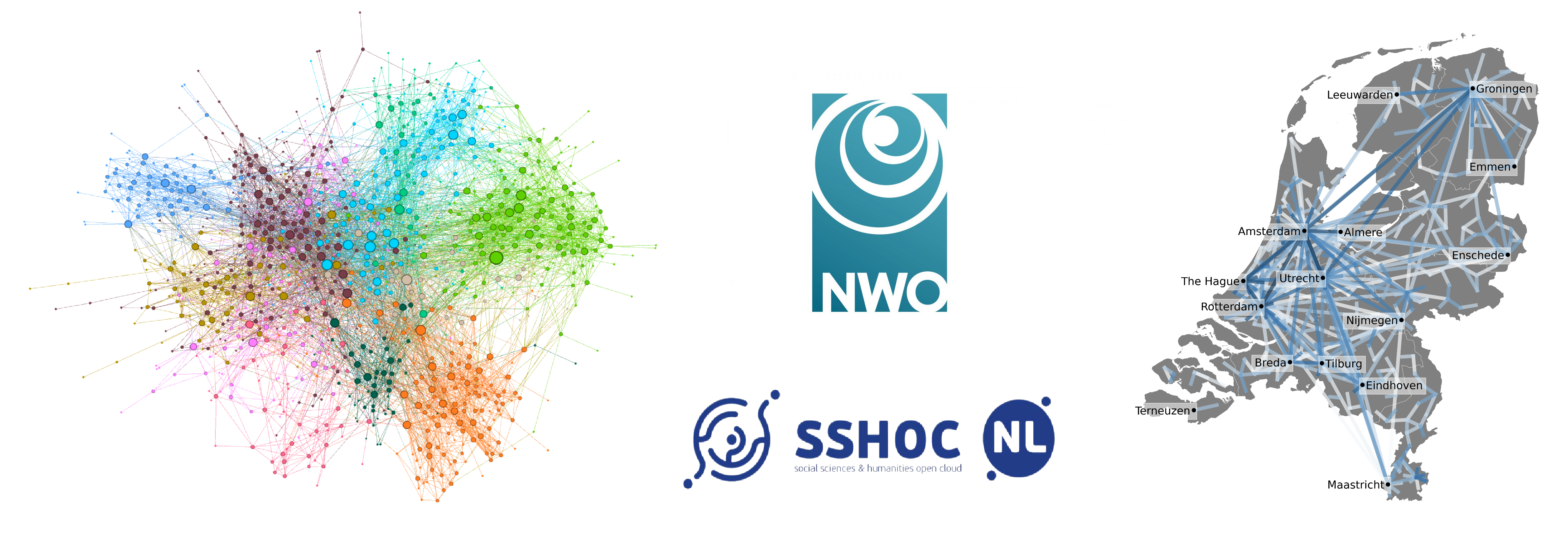
As part of the NWO SSHOC-NL research infrastructure project (2024-2028), the Platform for Large-scale Analysis of NETworks (PLANET-NL) aims to develop tools and algorithms for analyzing large scale datasets with (digital) traces of socio-economic interaction. We develop disclosure risk-aware methods and tools specifically in the context of combining different social network data sources (micro data registers, demographic databases, social media, etc.) at different levels of, e.g., social and geographical aggregation. For more information about PLANET-NL, see the PLANET-NL website.

bookmark_borderNew Project on Anonymity in Networks

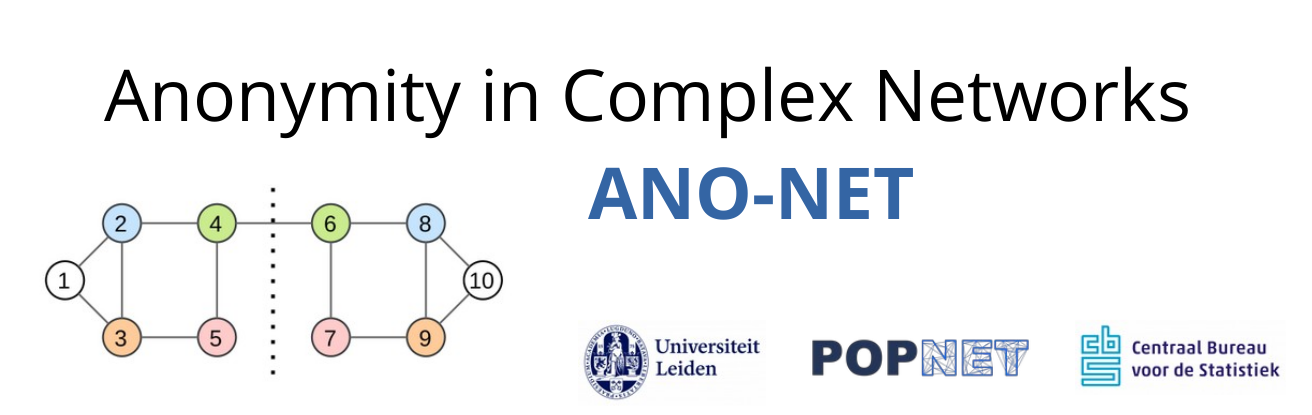
How anonymous is an individual in a social network, based on the structural position of this person in a network, as well as the person’s descriptive attributes? That’s the central question studied in the ANO-NET project, which runs from 2021 to 2025 and is jointly funded by Statistics Netherlands (CBS) and the Population-scale Social Network Analysis (POPNET) platform.

bookmark_borderTalk on Population-scale Social Network Analysis at IC2S2 2021

On July 30, I give a keynote talk at the 7th International Conference on Computational Social Science (IC2S2 2021) with the title “Population-scale Social Network Analysis”; describing some of the fundamental challenges in the recently started POPNET project, as well as some first early empirical results on the small-world structure of such networks. If you are interested, have a look at the slides of my IC2S2 2021 talk.

Also see the other contributions to the conference by my Leiden CNS group.

bookmark_borderNew project on Population Scale Social Network Analysis (POPNET)

In the coming 5 years, Statistics Netherlands (CBS), Leiden University and the University of Amsterdam (UvA) will work together on a project with the aim of doing population scale social network analysis. This entails not only cutting edge computational social science research into large-scale network data, but also necessary research infrastructure. The project is the result of a € 1M grant from the PDI-SSH initiative and aims to set up a community of researchers around the topic. Stay tuned for more information!